Creating Worlds
Art, in its most primal and profound essence, is not a mere representation of reality but an act of cosmogony. The artist and, by extension, the screenwriter do not limit themselves to the roles of observer or narrator; they function as "demiurges" and architects, tasked with taming the chaos of the blank page to construct entire universes from scratch.
The Process of Worldbuilding
Worldbuilding transcends the composition of a simple plot or the sketching of a landscape; it is the establishment of a new ontological reality. The creator defines:
-
Physical Laws: What is possible and what is impossible within this specific framework?
-
Moral Geography: Which values govern its inhabitants and how do they collide?
-
Historical Memory: What past burdens the characters and shapes their present?
The Script as the DNA of a World
In the specific case of the screenwriter, the creation of worlds takes on a unique dimension. The script is not the final product, but the blueprint of a living entity. Through action and dialogue, the screenwriter lays the foundations upon which the visual and auditory experience will be built. Every word serves as a creative command—a direction that transforms the abstract into the concrete and the imaginary into a lived experience.
"The writer does not simply write words; they create the coordinates through which the human soul will travel, suffer, and find redemption."
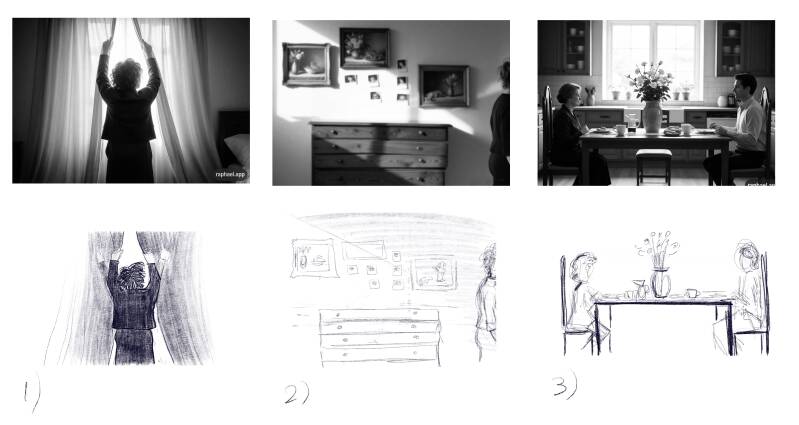
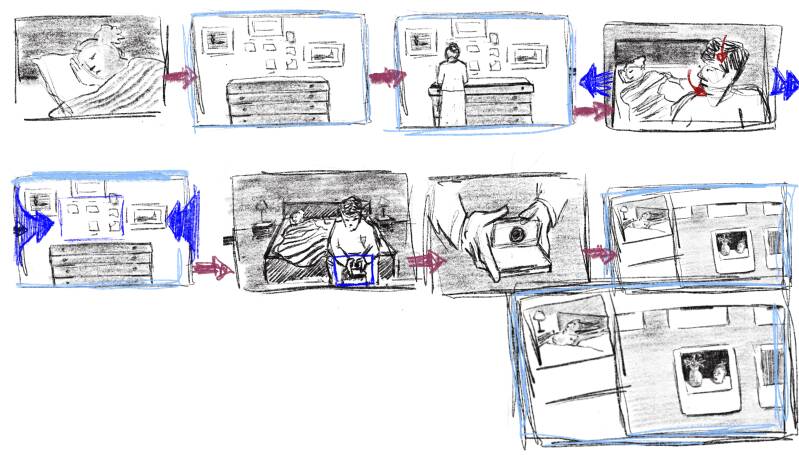
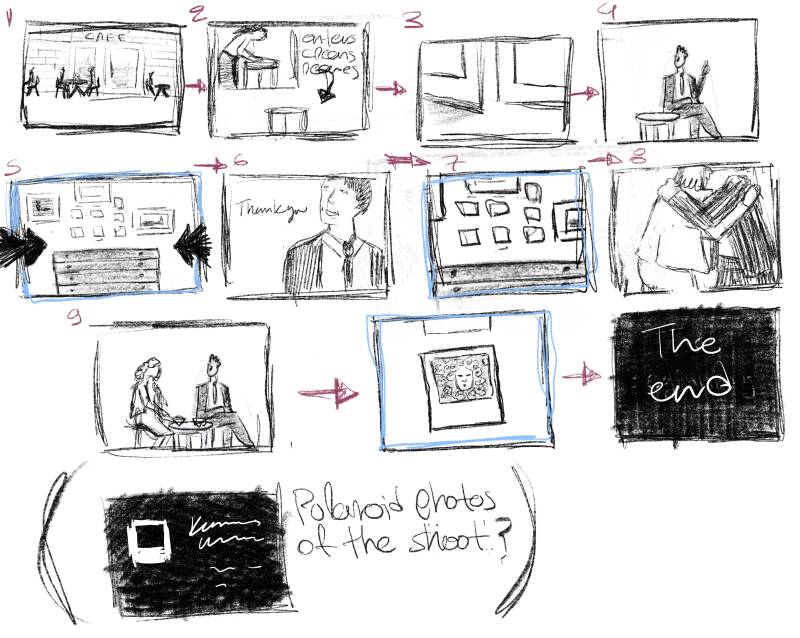
Here you can see a part of my process on writing and storyboarding my idea.
Story
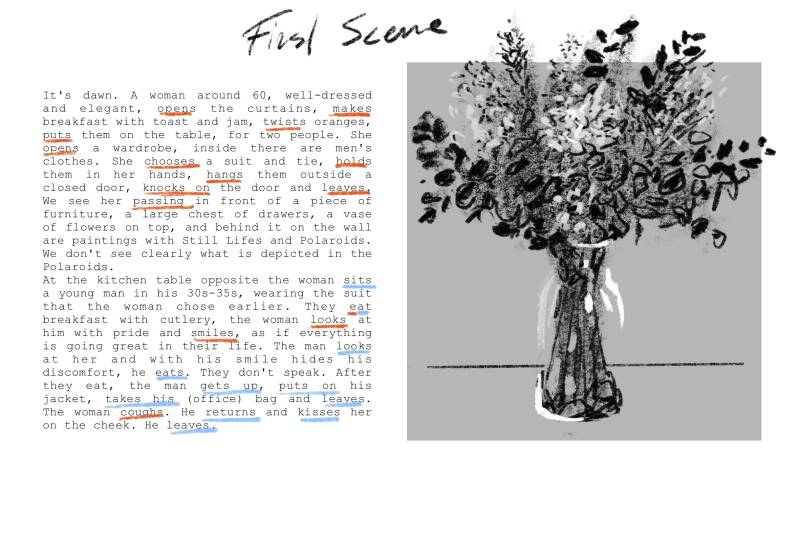
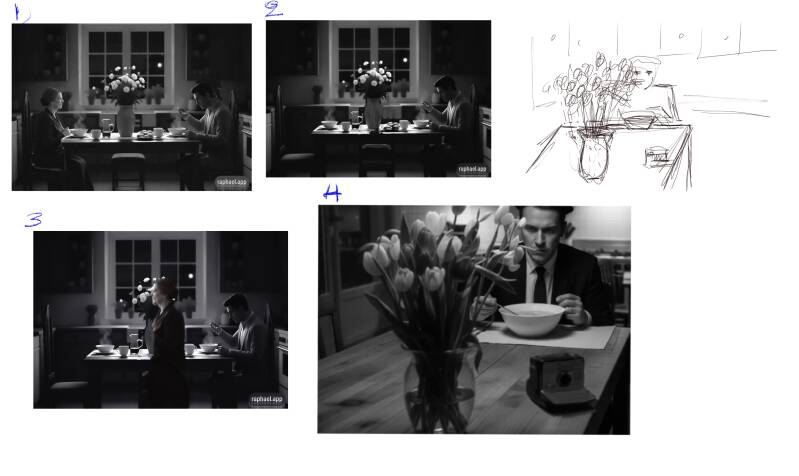
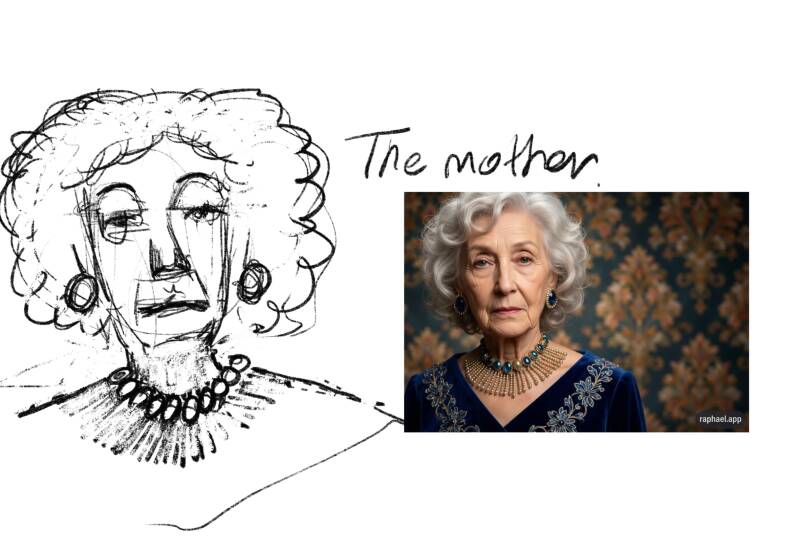
It's dawn. A woman around 60, well-dressed and elegant, opens the curtains, makes breakfast with toast and jam, twists oranges, puts them on the table, for two people. She opens a wardrobe, inside there are men's clothes. She chooses a suit and tie, holds them in her hands, hangs them outside a closed door, knocks on the door and leaves. We see her passing in front of a piece of furniture, a large chest of drawers, a vase of flowers on top, and behind it on the wall are paintings with Still Lifes and Polaroids. We don't see clearly what is depicted in the Polaroids.
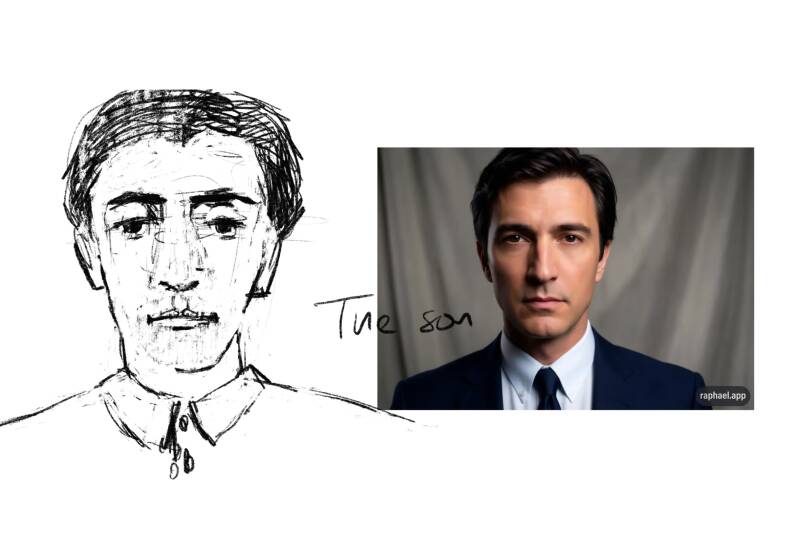
At the kitchen table opposite the woman sits a young man in his 30s-35s, wearing the suit that the woman chose earlier. They eat in the morning with cutlery, the woman looks at him with pride and smiles, as if everything is going great in their life. The man looks at her and with his smile hides his discomfort, he eats. They don't speak. After they eat, the man gets up, puts on his jacket, takes his (office) bag and leaves. The woman coughs. He returns and kisses her on the cheek. He leaves.
he is at his job in an office (probably a lawyer), working on the computer, open books in front of him, a library behind him. He is tired, rubs his face, looks outside, the day is sunny, he looks at his watch and makes the decision to go out.
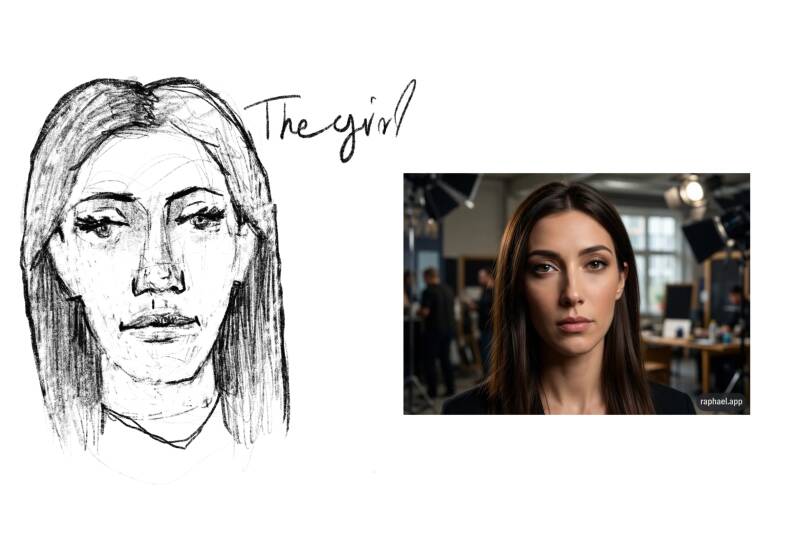
he walks outside and sees a cafe, goes inside, sits down and orders a cappuccino. The waitress comes. He looks at her and is fascinated. He looks at her while he works. Before he leaves, he talks to her and they exchange numbers. He goes out happily.
Back at the house, another breakfast. Mother and son are eating. The same awkward silence. The son looks at her as if he wants to tell her something. A dialogue begins in which he tells her that for the last month he has been seeing a girl. She doesn't look him in the eye while eating. He tells her that she is younger than him, that she is smart, etc. He tells her that he works in a cafe. The woman stops. She leaves her food and goes into her room. She opens the chest of drawers in front of the wall with the Polaroids. She takes a Polaroid camera and leaves it on the table. And she smiles at him woodenly, caresses his face. She takes their plates from the table. He hasn't finished eating yet. He keeps looking at the camera.
In the evening, in a hotel room, the man holds the camera in his hands, sits on the edge of the bed, the waitress sleeps behind him under the sheets. He looks at her.
In the mother's house, a figure (or mother?) Takes the vase from the dresser, from behind the Polaroids are revealed. They are photos of dead women on beds or tables arranged as if in still lifes.... The man in the hotel stands over the girl... she opens her eyes...
In the morning, in the same cafe, the door opens and the man enters. He sits down and gestures to order. The kitchen table in the mother's house is empty. The man's order comes, he thanks the waitress, it's another girl...
At the mother's house, another one has been added to the Polaroid photos...
The door of the cafe opens, the man gets up and hugs the girl...
The photo on the wall is of the mother dead and the flowers around her head like a still life.


Create Your Own Website With Webador